Malaysia Fuel Price Pressure Analysis: Impact of Fuel Subsidy Cuts and Ceasefire Developments
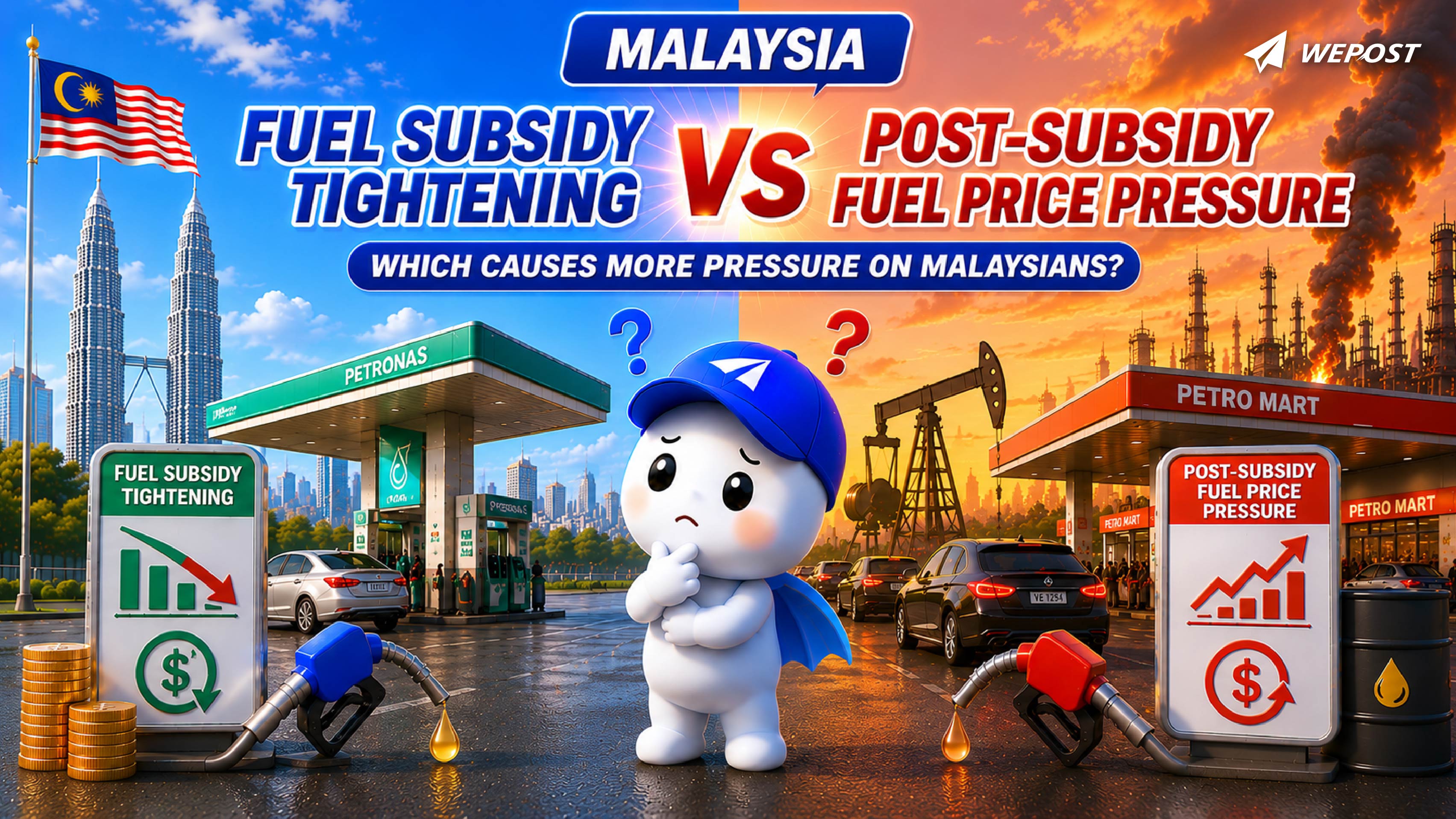
1. Subsidies shifting from “same price for everyone” to “eligibility restrictions + monthly quota limits”
In the past, Malaysian vehicle owners had a very direct experience with low-priced RON95 fuel: when they went to petrol stations, fuel prices were kept low through long-term government subsidies.
The logic is now changing. The government has first narrowed the subsidy recipients to Malaysian citizens and eligible users, and has further introduced a limit on the amount of subsidised fuel available.
According to public reports, under the BUDI95 mechanism, eligible individuals were initially allowed a monthly subsidised RON95 quota of 300 litres. The latest adjustment reduces the limit to 200 litres, with usage beyond the quota potentially charged at floating market prices.
This means the so-called “price increase” may not appear as an immediate nationwide change in petrol station prices. Instead, it may appear as a more indirect form of tiered pricing: drivers with lower usage who remain within their quota may feel limited impact;
However, those with long commutes, multiple vehicles in a household, business-related travel, or e-hailing operations may reach the quota limit faster and face actual market prices sooner. The government reduces subsidy expenditure, while individuals begin paying for fuel beyond the subsidised allocation.
2. Commercial diesel fleet card quota reductions increase logistics cost pressure
| Commercial vehicle fuel quota tightening (monthly quota changes for selected vehicle types) | |||
|---|---|---|---|
| Vehicle Type | Original Quota (L/month) | New Quota (L/month) | Reduction |
| Panel Van | 2,999 | 900 | -70% |
| Rigid Lorry | 3,999 | 1,200 | -70% |
| Refrigerated Truck | 3,999 | 1,600 | -60% |
| General Cargo | 5,999 | 1,800 | -70% |
| Prime Mover | 6,999 | 5,000 | -28.6% |
The table shows that the revised quotas for multiple commercial vehicle categories are significantly lower than previous allocations. Panel Van and Window Van quotas were reduced from 2,999 litres to 900 litres; some rigid lorries were reduced from 3,999 litres to 1,200 litres;
General Cargo vehicles were reduced from 5,999 litres to 1,800 litres, while refrigerated trucks, open platforms, curtainsiders, prime movers and other categories were also reclassified with different quota levels.
Although the figures above refer to commercial vehicle fleet card fuel quota arrangements and do not directly represent the personal RON95 quota limit for private vehicle owners, the policy direction is consistent: subsidies will no longer provide unlimited protection, but instead will be adjusted closer to the level of necessary operational usage.
For transport companies, this is not a minor issue. Fuel is one of the most sensitive components of logistics costs. After quota reductions, companies will likely focus on three areas: reducing empty vehicle trips, recalculating routes and schedules, and passing excess fuel costs into transportation charges.
Ultimately, the pressure may spread through the supply chain and affect food prices, cold-chain products, construction materials, online shopping delivery fees, and small businesses’ procurement costs.
In other words, fuel prices do not only affect drivers; they quietly reshape everyone’s daily expenses.
| Reference: Changes in Monthly Quota for Selected Commercial Vehicles | ||||
|---|---|---|---|---|
| Vehicle Type | Usage Category | Original Quota | Revised Quota | Change |
| VAP Panel Van | BF: BRG -Rigid Decon 950-7500kg | 2,999 | 900 | -70.0% |
| VAN Window Van | BF: BRG -Rigid Decon 950-7500kg | 2,999 | 900 | -70.0% |
| LRL Lori Rigid Luton/Kotak | BB: Barangan Rigid | 3,999 | 1,200 | -70.0% |
| PIC Pick Up Truck | BF: BRG -Rigid Decon 950-7500kg | 0 | 1,200 | New +1,200 |
| LRL Lori Rigid Luton/Kotak | BF: BRG -Rigid Decon 950-7500kg | 3,999 | 1,200 | -70.0% |
| LRR Lori Rigid -Refrigerated | BB: Barangan Rigid | 3,999 | 1,600 | -60.0% |
| LRA Lori Rigid -Kargo AM | BB: Barangan Rigid | 5,999 | 1,800 | -70.0% |
| LRA Lori Rigid -Kargo AM | BF: BRG -Rigid Decon 950-7500kg | 5,999 | 1,800 | -70.0% |
| LCS Lori Rigid -Curtainsider | BB: Barangan Rigid | 3,999 | 2,000 | -50.0% |
| LRO Lori Rigid -Open Platform | BB: Barangan Rigid | 3,999 | 2,000 | -50.0% |
| LRH Lori Rigid -Kandang Haiwan | BB: Barangan Rigid | 3,999 | 2,500 | -37.5% |
| LTT Lori Tangki Rigid -Tepung | BB: Barangan Rigid | 3,999 | 4,000 | Basically unchanged |
| PGU Penggerak Utama | BA: Barangan -Penggerak Utama | 6,999 | 5,000 | -28.6% |
| PGU Penggerak Utama | BQ: BRG -Penggerak Utama Kontena | 6,999 | 5,000 | -28.6% |
Note: The table above is compiled based on available information. Quota units are interpreted according to the fleet card monthly litre quota context reported publicly. The original quota for PIC Pick Up Truck was 0, therefore it is marked as a new allocation.
3. Ceasefire framework may ease oil prices, but cannot replace domestic subsidy reform
Another major factor affecting international oil prices is the issue of war and ceasefire. Recent developments surrounding negotiations involving the United States, Iran, and the Middle East have reported progress, with some media reports stating that both sides have reached an agreement framework and are moving towards an “immediate and permanent cessation of military actions”.
If shipping through the Strait of Hormuz can resume, blockades are lifted, and military risks decline, the risk premium in crude oil markets is theoretically expected to fall. Malaysia’s energy import pressure may also ease temporarily.
However, a ceasefire is not a complete solution for fuel prices. First, the ceasefire agreement still requires formal signing, public disclosure of terms, and continued implementation before the market truly believes the risks have been removed.
Second, even if international oil prices decline, the government may not return to the previous large-scale blanket subsidy (universal subsidy) system, as the fiscal burden has become too heavy.
Third, once the mechanism changes to targeted or fixed-amount subsidies, price pressure will continue through “market prices after exceeding the allocated quota”.
4. Three key signals to watch next
First, observe whether the individual RON95 quota will be further reduced, or whether more detailed classifications based on income, usage purpose, and location will be introduced.
Second, observe whether commercial vehicles can obtain additional quotas through an appeal mechanism; or if the appeal process becomes stricter, transportation companies may adjust their logistics charges more quickly.
Third, observe whether the ceasefire agreement can truly restore stable oil transportation. As long as Middle East shipping and insurance costs remain high, Malaysia’s subsidy pressure will not be completely eliminated.
From a policy perspective, reducing wastage and combating fuel smuggling are necessary measures. However, from a public perspective, the government must improve transparency, allowing people to clearly understand who will be affected, the price after exceeding quotas, and whether business cost increases will be reasonably monitored.
Otherwise, subsidy reform may easily be perceived as a simple price increase rather than a measure to restore fiscal sustainability.
Conclusion: The era of cheap fuel is gradually coming to an end
The real challenge Malaysia faces is not only whether fuel prices will rise or fall, but that the subsidy model itself has changed.
In the past, the government helped most people absorb market price increases; now, the government only provides protection up to a certain level, while the remaining costs are faced by consumers and businesses themselves.
If the war moves towards a permanent ceasefire, it will certainly be positive news as it can reduce tension in the international energy market. However, domestic subsidy tightening has already begun, and fuel cost pressure will continue reaching households through quotas, transportation costs, and overall prices.
Main references:
Malaysia Ministry of Finance / BERNAMA: Under the BUDI MADANI RON95 mechanism, Malaysian citizens receive RON95 subsidy at RM1.99 per litre, with the original individual monthly quota set at 300 litres.
The Edge Malaysia (2026-03-27): Reported that individual BUDI95 subsidy quota was reduced from 300 litres to 200 litres, with usage beyond the quota charged according to floating market prices; estimated annual savings of approximately RM5 billion.
Daily Express Malaysia (2026-06): KPDN stated that fleet card monthly quotas have been adjusted between 900 and 5,000 litres, with additional quota applications possible based on operational information.
KPDN official fleet card page: Subsidised fuel is only limited to approved applicants or vehicles registered under the company, and KPDN may review or revoke approvals based on conditions.
AP, AFP/eNCA, CGTN and other reports: The US-Iran peace/ceasefire framework was announced, with some reports stating that a permanent cessation of military actions was being pursued. Formal signing, public terms, and future implementation remain key factors.
Written by: WePost Marketing Department DONG JI





 New Parcel
 Parcel
 Shipment
 Alipay Services
 Shopping Cashback
 Local Shipping
 Reviews
 Enquiry
 Shopping
 Cart
Cart
 Order
Order
 Favourite
 Dashboard
 My Wallet
 Address Book
 Coupon
 Merchant Voucher
 Clubs
Clubs
 My Friends
 Donation
 Share
Share
 Help Center
 Settings
 WePost Pro
 Community
 Lucky Draw